
Hair Topper for a Thinning Crown: Toronto, ON Guide
Crown thinning rarely follows a neat circle. The visible area may widen along the part, sit farther back around the whorl, or spread unevenly toward one side. That shape affects the topper you need. A piece that is too small can leave an edge sitting inside the thinning area. A piece that is much larger than necessary may add weight and hair you did not want.
This guide treats the choice as a fitting problem, not a beauty trend. You will learn how to map the coverage area, compare base shapes, think about attachment points, and prepare for a consultation. It also explains why a topper, which Continental Hair calls a Postiche, is different from a full wig.
Continental Hair was founded in Toronto in 1964 and has worked specifically with women’s hair replacement for decades. Its public history traces the Postiche from an early hairpiece created by Emma Suba to the lighter partial systems used today. That background is useful here because crown coverage depends on small construction choices that are easy to miss in an online product photo.
How Do You Choose a Hair Topper for a Thinning Crown?
A hair topper covers a thinning crown by placing a partial base over the sparse area and attaching beyond it. The Postiche and topper options show the product category, while the wig or hair topper guide explains when partial coverage may suit your needs.
The base is the hidden foundation under the added hair. On a clip-in topper, clips or combs sit around that foundation. On another type of partial system, the method may differ. The important point is that the base needs to cover the visible scalp and leave enough room for secure attachment.
Picture the thinning area as the centre of a map. The perimeter is the hair around it. The topper needs to extend past the centre and reach a stable perimeter. If an attachment point lands directly on fragile or sparse hair, the piece may feel less secure. Moving the anchor outward often means choosing a slightly larger base, not simply tightening a clip.
Crown coverage also needs to respect the natural whorl. Hair changes direction around the crown, so the added hair must be cut and styled to work with that movement. A base that covers the right square centimetres can still look wrong if its parting or ventilation fights your natural growth pattern.
A topper may be a practical choice when you still have enough surrounding hair for blending and attachment. A full wig covers the whole scalp. An integration or semi-permanent system uses a different wear pattern. The right category depends on coverage, lifestyle, and how often you want to remove the piece.
Key coverage checks:
- Cover the entire visible scalp area.
- Extend into stronger surrounding hair.
- Follow the crown’s natural direction.
- Leave room for a believable blend.
- Avoid unnecessary weight or density.
Which Topper Shape Matches Your Crown Thinning?
The best topper shape follows the actual thinning pattern, not a generic label. Compare the existing thinning-hair solutions with the history and design of the Postiche before deciding that one standard base shape will fit every crown.
A narrow, lengthwise base can suit a widening part when the hair beside the part remains strong. A broader oval or rounded base may make more sense when thinning spreads across the crown. A front-focused piece needs a different hairline design than one that sits behind the front hairline.
The shape should also account for where you want to part the added hair. Some bases have a fixed part. Others allow more parting freedom. That difference matters if your style changes from day to day or if the visible part needs to align with your natural hair.
| Thinning pattern | Useful starting shape | Main fitting question |
|---|---|---|
| Widening centre part | Narrow rectangular or oval base | Does the edge reach stable side hair? |
| Round crown spot | Rounded or oval base | Does it extend beyond the whorl? |
| Diffuse crown thinning | Broader oval base | Are all attachment points outside sparse hair? |
| Front and part thinning | Front-focused base | How will the front edge meet the hairline? |
| Uneven thinning | Custom-shaped coverage | Can the piece avoid extra bulk? |
Treat these shapes as fitting categories, not prescriptions. Two people with a similar widening part can have different head curves, hair density, and styling habits. A flat measurement can show length and width, but it does not show how a base will sit on a curved crown.
The goal is a base that disappears into the hairstyle. More coverage is not automatically better. Extra base can create heat, stiffness, or volume where you did not ask for it. Too little coverage can make the edge harder to hide. The useful range sits between those two problems.
How Large Should a Crown Topper Base Be?
A crown topper base should be larger than the full thinning area and reach secure hair around every attachment point. The next hair topper measurement guide provides the worksheet, while a Toronto fitting consultation can confirm how flat measurements sit on your head.
Start by identifying the outermost visible change in density. Do not measure only the clearest patch. Follow the softer boundary where the hair starts to look fuller. Measure front to back and side to side across that complete area. Then note where stronger hair begins.
The attachment margin is not one fixed number for everyone. Fine hair may need a different placement than thicker hair. A stylist may also shift the base to account for the direction of the whorl or the way your part falls. That is why a measurement is a starting point rather than a final order specification.
Use a flexible tape and keep it level with the head. Do not pull it tight. Record the widest points, then take a photo of the mapped area for your own reference. If the pattern changes quickly, repeat the map before ordering. A base selected from an old measurement can miss the new perimeter.
Measurement steps:
- Style your hair in its usual part.
- Mark the full visible thinning boundary.
- Measure front to back.
- Measure side to side.
- Note where stronger hair begins.
- Photograph the mapped area.
- Confirm the shape during fitting.
A larger base can distribute added hair across more area, but it also changes the feel and blend. A smaller base can be lighter, yet it demands accurate placement. The right result is not the smallest piece you can clip on. It is the smallest base that provides complete coverage and stable attachment without forcing excess density.
What Attachment Details Matter for a Thinning Crown?
Attachment should feel secure without relying on excessive tension. Review the removable design described on the Continental Hair topper page, then compare your daily routine with available salon fitting and styling services before choosing clip, comb, or another method.
For a removable clip-in piece, placement matters as much as clip strength. The clips need to open and close cleanly, lie flat, and reach suitable hair. A tight clip positioned in a poor spot is not a good substitute for the right base. If you feel pulling, pressure, or a hot spot, remove the topper and reassess the fit.
The number of clips should match the base and the way it sits. More clips can add control, but they also add hardware and attachment points. Fewer clips can feel lighter, though the base may move if the placement is wrong. A fitting should test normal head movement instead of checking the piece only while you sit still.
Your routine matters too. Someone who removes a topper every evening needs an attachment method that is easy to operate and repeat. Someone who changes the part or wears glasses may need the base edge adjusted differently. A topper that works for a short appointment should still feel stable after several hours.
Practical fit checks:
- Turn your head in both directions.
- Look down and back up.
- Check each clip for pressure.
- Run fingers along every edge.
- Confirm glasses do not catch.
- Remove and reattach it yourself.
Stop if the piece causes persistent discomfort. Product fitting does not assess scalp conditions. If your scalp is irritated, painful, or changing, speak with an appropriate health professional before continuing to wear the topper.
How Do You Match Density, Colour, and Hair Direction?
A natural blend depends on matching the amount and movement of your own hair, not adding the most hair possible. Use the existing Toronto topper overview for the broad product context and the natural-looking human hair guide for related styling principles.
Density is the amount of hair ventilated or attached to the base. If the topper is much denser than your own hair, the transition can look abrupt. If it is too light, it may not provide enough coverage. The target is a believable continuation of your current style.
Colour matching needs more than one swatch. Hair can have a base shade, lighter ends, natural variation, and grey distribution. Indoor salon light and daylight can make the same piece look different. Compare colour near a window when possible, then check how it reads in the lighting you see most often.
Hair direction determines where the added hair wants to fall. A crown has a whorl. A part has a line. The topper should work with those patterns. Cutting and styling can refine the blend, but they cannot fully correct a base that forces hair in the wrong direction.
Length should be chosen with the finished cut in mind. A topper may arrive longer so a stylist has room to blend it. Continental Hair’s published salon policy notes that initial styling and colouring are included with its wigs and hair systems, with adjustment terms stated on that page. Verify current terms during your consultation because policies can change.
Match in this order:
- Confirm base coverage and attachment.
- Match density near the perimeter.
- Align the part and crown direction.
- Compare colour in natural light.
- Blend the finished length and shape.
What Should You Bring to a Toronto Topper Consultation?
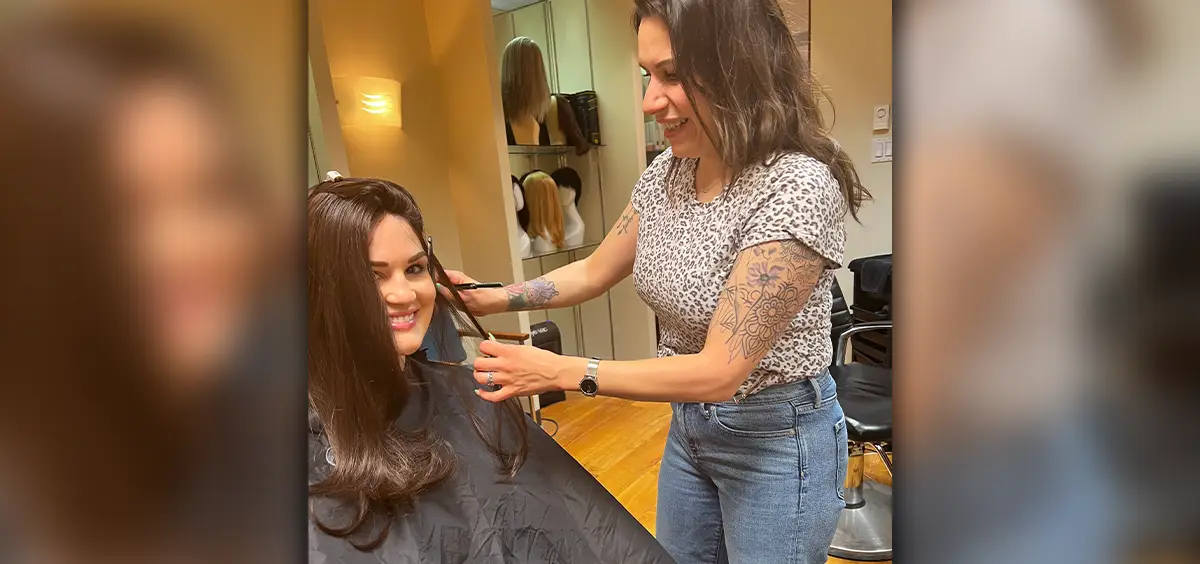
Bring your usual hairstyle, recent photos, colour references, and questions about daily wear. The Avenue Road Toronto salon is north of Yorkville, while the Sunnybrook location serves visitors at the Louise Temerty Breast Cancer Centre.
Arrive with your hair clean and styled the way you normally wear it unless the salon gives different instructions. If you change your part often, say so. If you wear glasses, hearing devices, hats, or headbands, bring them. Small items around the ear or temple can affect how a base edge feels.
Photos help show what you like, but they should not become a promise that one piece will recreate another person’s hair. Bring an older photo of your own preferred style if you have one. That gives the fitter a more personal reference for length, volume, and movement.
Write down the parts of the decision that matter most. Some people value easy daily removal. Others care more about parting freedom, low weight, or the ability to style with heat. Ranking those needs helps the consultation stay focused.
Useful questions include:
- Where will each attachment point sit?
- Can I reattach it without help?
- How much styling is included?
- Which care products are appropriate?
- What repairs can the salon perform?
- Which policy terms apply to this piece?
Continental Hair lists three locations: Avenue Road in Toronto, Sunnybrook Hospital, and Sarnia. Call the location you plan to visit so the team can confirm appointment details and product availability. For the main Toronto salon at 92½ Avenue Road, call (416) 923-7747.
Frequently Asked Questions About Crown Hair Toppers
Is a topper better than a wig for crown thinning?
A topper may suit crown thinning when you have enough surrounding hair for secure attachment and blending. A wig provides full-scalp coverage and does not depend on blending through the crown. The best choice depends on the size of the thinning area, your comfort, daily routine, and preferred attachment method.
How far should a topper extend past the thinning area?
A topper should extend far enough to place its attachment points in suitable surrounding hair. There is no universal margin because hair density, base shape, head curve, and clip position differ. Map the complete sparse area first, then confirm the extra coverage during a fitting instead of guessing from one flat measurement.
Can a crown topper use a centre part?
Many crown toppers can support a centre part, but the result depends on the base construction and how the hair is ventilated. Some pieces have a fixed part, while others allow more movement. Check that the topper’s part aligns with your own pattern before the final cut and colour work begins.
Should a topper feel tight when first fitted?
A topper should feel secure, but persistent tightness, pulling, or concentrated pressure is a reason to stop and adjust it. More tension does not correct the wrong base or clip position. Remove the piece if discomfort continues. Ask the fitter to reassess attachment points, base size, and the way it follows your crown.
Can you colour a human hair topper?
A qualified colour professional may be able to adjust a human hair topper, but the safe options depend on the hair’s processing history and current condition. Colouring cannot always move in every direction. Ask what has already been done to the hair and have the specific piece assessed before any chemical service.
How often should you replace a crown topper?
There is no single replacement interval. Wear frequency, hair quality, heat use, washing, storage, cap handling, and repairs all affect service life. Watch for changes in base stability, shedding, texture, and the ability to hold the intended style. A salon can help compare repair costs with replacement.
Can I measure for a topper at home?
You can map the visible area at home with a flexible tape, photos, and notes about where stronger hair begins. That information helps prepare for a consultation. A professional fitting still adds the head curve, attachment placement, hair direction, density, and colour checks that a flat length-and-width measurement cannot capture.
Sources
This guide uses Continental Hair’s current product, About, contact, service, and policy pages. General topper construction and fit context was checked against the National Alopecia Areata Foundation’s wigs and toppers guide. Product fit information is general and does not replace advice from a licensed health professional.
Ready to compare coverage in person? Book a private fitting at the Toronto, Sunnybrook, or Sarnia location. For Avenue Road in Toronto, call (416) 923-7747.

author info :
Allison Beaumont